Some other dates to add to your workplace safety calendar are below. But remember that workplace safety and health are something to promote every day of the year.
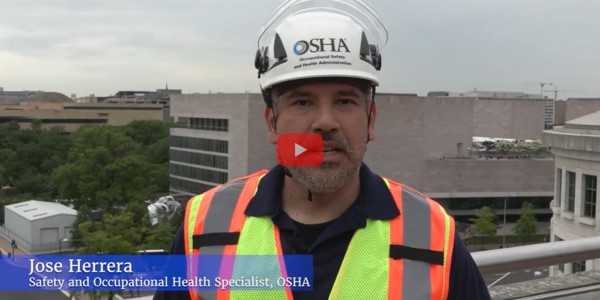
Watch this short videoto learn about available resources to protect your mental health at work. You can also visit our website for resources on workplace stress
During Mental Health Awareness Mont, we're reminding everyone that protecting psychological health in the workplace is just as important as addressing physical hazards. Workers are constantly dealing with stress on and off the job, and sometimes it can affect safety, performance, and overall well-being. Stress can also take a toll on physical health, including increasing the risk of heart disease.
However, workplaces can be a key place for resources, solutions, and activities designed to improve our mental health and well-being. In the video above, representatives from OSHA's Construction Industry Alliance for Suicide Prevention and Associated Builders Contractors discuss mental health stigma and how workplaces can better support their teams.
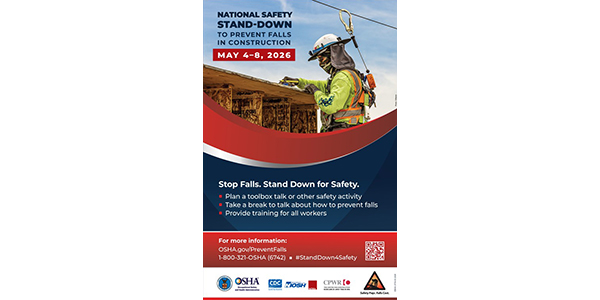
Falls remain the leading cause of fatalities in construction. The latest data shows that falls accounted for 389 of the 1,034 construction fatalities (according to the Bureau of Labor Statistics). Those tragedies could have been prevented. This week marks the National Safety Stand-Down to Prevent Falls in Construction, when employers take a break from usual work activities to talk directly to employees about fall hazards and emphasize the importance of fall prevention. Take a moment to join the effort. Learn more about the Stand-Down and how to protect workers from falls every day of the year.
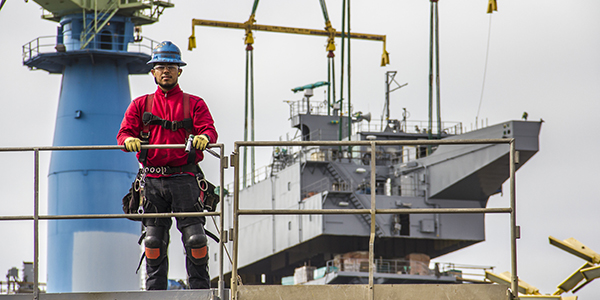
Last month launched a new local emphasis program to strengthen safety and health protections for maritime workers throughout Puerto Rico and the U.S. Virgin Islands. This five-year initiative focuses on programmed inspections on maritime operations on or near U.S. waterways traveled by boats and ships. It covers shipbuilding and repair, boat building, marine cargo handling, navigation services to shipping, port and harbor operations, and recreational boat repair at marinas. This effort is in response to persistently high injury and illness rates in maritime industries, which in some cases are nearly three times higher than the private industry average.
Falls are the leading cause of fatalities in the construction industry but are preventable. During the National Safety Stand-Down to Prevent Falls, May 4-8, employers and workers nationwide will focus on training, hazard recognition, and safe use of ladders, scaffolds, and fall protection systems. Be part of the effort to stop falls and save lives. Visit the Stand-Down webpage to learn more and find out how you can participate.
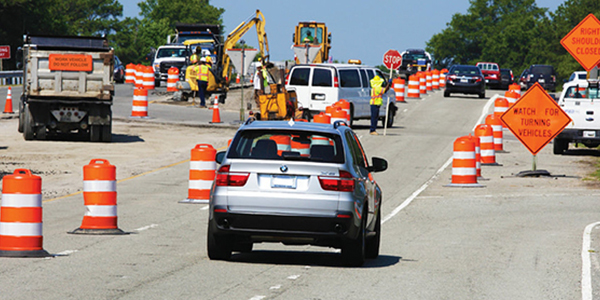
Every day, workers performing construction and repairs along our nation’s highways, roads, bridges, and tunnels are often exposed to hazards from outside and inside their work zones. One of the most common of these is being struck by passing motorists who fail to follow posted speed limits and caution signs. During the annual Work Zone Awareness Wee, April 20-24, we join our roadway work zone safety Alliance partners to raise awareness about the important role the public plays in protecting the workers who make it possible to commute to their jobs, run errands and visit loved ones. Go to the official website to learn how you can participat and help make work zones safer for everyone.
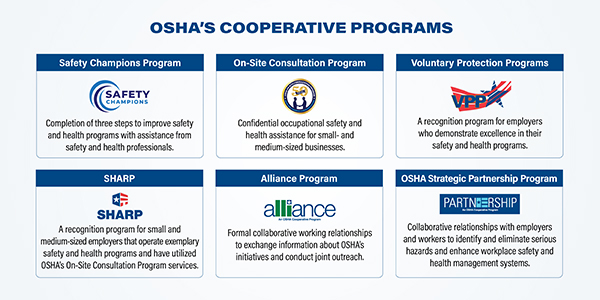
OSHA offers no-cost cooperative programs to help organizations prevent workplace fatalities, injuries, and illnesses. These programs are open to trade and professional associations, businesses, industry groups, unions, and community- and faith-based organizations. All of our cooperative programs are designed to help you build or improve effective safety and health programs.
OSHA Assistant Secretary Dave Keeling is reminding employers and workers that trench safety can help save lives. We offer valuable resources to help protect America’s workers, including training and free consultation services to prevent tragedies before they happen.
When trench operations are done safely, workers can go home at the end of the day. With OSHA resources and guidance, employers have the tools they need to protect lives and prevent tragedies before they happen. Read more.
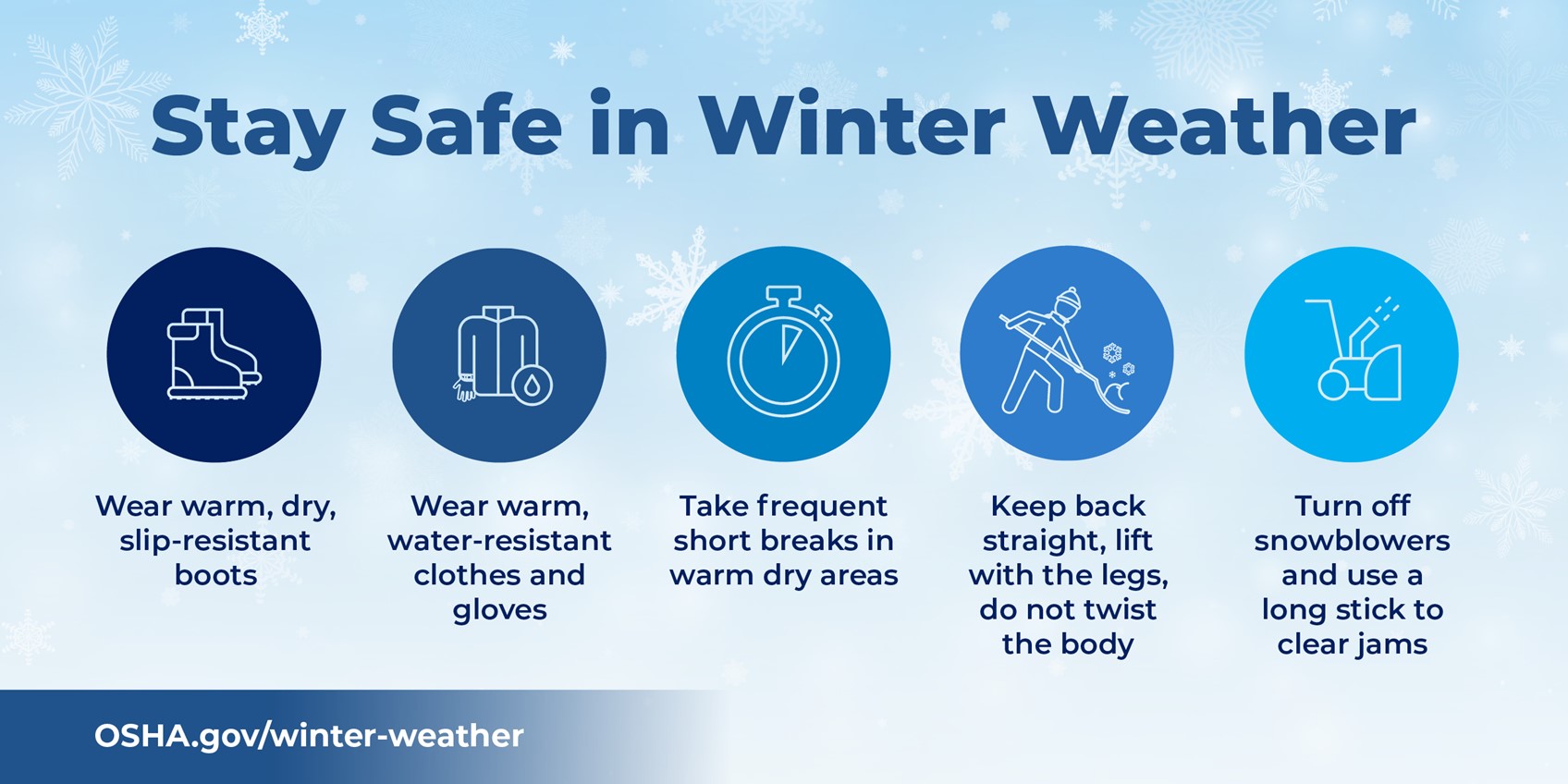
In addition to cold stress, there are other winter weather related hazards that workers may be exposed to when performing tasks such as driving in the snow, removing snow from rooftops, and working near downed or damaged power lines. Read More.