 The National Institute for Occupational Safety and Health released a study last month in its Morbidity and Mortality Weekly Report on hearing impairment among noise-exposed workers in the United States from 2003 to 2012. This study found a prevalence of 13 percent hearing loss (mild to complete) among 1.4 million audiograms studied. This study confirms and quantifies the prevalence of hearing loss among employees of nine major industry sectors. The mining, construction and manufacturing industries had the highest prevalence of workers with any hearing impairment or moderate to severe hearing impairment. Occupational hearing loss, primarily caused by high noise exposure, is the most common U.S. work-related illness. NIOSH estimates that 22 million U.S. workers are exposed to hazardous occupational noise. For more information, see OSHA's Occupational Noise Exposure webpage.

Center for Public Health Workforce Development eNews
Wednesday, May 18, 2016
NIOSH releases study on work-related hearing loss
The National Institute for Occupational Safety and Health released a study last month in its Morbidity and Mortality Weekly Report on hearing impairment among noise-exposed workers in the United States from 2003 to 2012. This study found a prevalence of 13 percent hearing loss (mild to complete) among 1.4 million audiograms studied. This study confirms and quantifies the prevalence of hearing loss among employees of nine major industry sectors. The mining, construction and manufacturing industries had the highest prevalence of workers with any hearing impairment or moderate to severe hearing impairment. Occupational hearing loss, primarily caused by high noise exposure, is the most common U.S. work-related illness. NIOSH estimates that 22 million U.S. workers are exposed to hazardous occupational noise. For more information, see OSHA's Occupational Noise Exposure webpage.

OSHA and NIOSH provide guidance for protecting workers from exposure to Zika virus
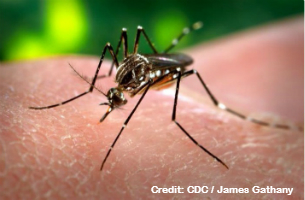 An outbreak of Zika is spreading through Central and South America, Mexico, and parts of the Caribbean, including U.S. territories. Though Zika currently isn't spreading on the mainland through mosquitoes—the main route of transmission of the virus—employers and workers should take steps to prevent or minimize the risk of Zika infection if transmission starts to occur or if they work with travelers returning to the U.S. with Zika. An OSHA and NIOSH interim guidance* provides recommendations on protecting workers who may be at risk for Zika virus infection through on-the-job exposure to mosquitoes or the blood or other body fluids of infected individuals. Visit OSHA's Zika webpage for more information.
Workers Memorial Day: Remembering and honoring those who've died on the job
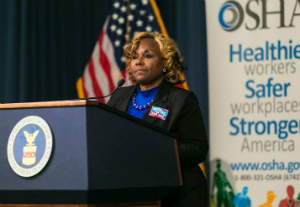 Every year more than 4,800 workers go to work and never return home as a result of entirely preventable workplace incidents and another 50,000 workers die from preventable work-related diseases. To remember and honor these workers, OSHA, unions, family members, workers and employers come together each year on April 28 to commemorate Workers Memorial Day.
"Tomorrow and every day thereafter, in honor of those we have lost, we will fight to make sure that every American worker is protected against the myriad of hazards out there affecting their safety, their health, their lives and the security of their families," said OSHA Assistant Secretary Dr. David Michaels.
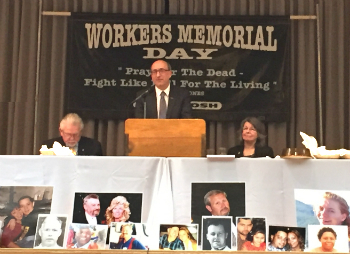
Workers Memorial Day was recognized by President Obama in a presidential proclamation issued April 28 and OSHA hosted an event marking the occasion at the U.S. Department of Labor headquarters in Washington, D.C. The program included remarks from Deputy Secretary Chris Lu, OSHA Assistant Secretary Dr. David Michaels, MSHA Assistant Secretary Joe Main, AFL-CIO Safety and Health Director Peg Seminario, United Steelworkers Safety and Health Director Mike Wright, and Duronda Pope from the United Steelworkers' Emergency Response Team.
This was just one of the many events commemorating Workers Memorial Day held across the country throughout the week, where participants rededicated themselves to the mission of preventing workplace injuries, illnesses, and deaths. To learn more, visit the Workers Memorial Day webpage.
CAOHC Approved Occupational Hearing Conservation Certification Course offering
 Register now to hold your seat in the June 1-3, 2016 “CAOHC Approved Occupational Hearing Conservation Certification Course” with CAOHC Course Director Timothy A. Swisher, MA, CCC-A.
Friday, April 22, 2016
Long-awaited rule on silica unveiled at emotionally charged event
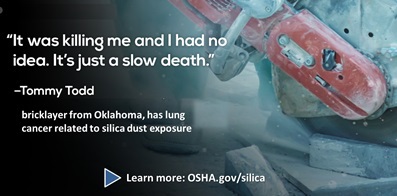 OSHA held a public event on March 24 at the International Masonry Institute in Bowie, Md., to announce a final rule to protect workers by reducing their exposure to respirable silica dust. The rule will curb lung cancer, silicosis, chronic obstructive pulmonary disease and kidney disease in America's workers.
The event was attended by more than 200 people, including several victims of silica-related diseases. Speakers included U.S. Secretary of Labor Thomas E. Perez, OSHA Assistant Secretary Dr. David Michaels and Tom Ward, whose father died of silicosis. Later, attendees were able to watch apprentice bricklayers demonstrate cutting and drilling equipment that uses water to keep dust from getting into the air or a ventilation system to remove it from the air.
The final rule contains two standards, one for construction and one for general industry and maritime. Both standards reduce the permissible exposure limit for crystalline silica and include employer requirements to protect workers, such as by limiting worker exposure through work practices and engineering controls; training workers; limiting their access to high exposure areas and providing medical exams to highly exposed workers.
Visit OSHA's silica rule webpage for factsheets, answers to frequently asked questions, and to sign up for email updates on compliance dates and resources.
April is Distracted Driving Awareness Month
 The National Safety Council designates April as Distracted Driving Awareness Month, a time to draw attention to the hazards of using cell phones while driving. As the NSC notes, phone use while driving, including texting and reading social media, has contributed to thousands of highway deaths. Employers can play a big role in protecting workers who drive for their job. The NSC encourages employers to download its employer cell phone policy toolkit and to read the Cummins cell phone policy case study* . In addition, NSC is offering its online Defensive Driving Class at no charge from April 18 to 24. To enroll in the class, go to NSC’s online registration form and enter “distracted” as the access code.
"OSHA reminds employers that they have a responsibility to protect their workers by prohibiting texting while driving. It is a violation of the OSH Act for employers to require workers to text while driving, create incentives that encourage or condone it, or structure work so that texting while driving is a practical necessity for workers to carry out their job. For more information, please see OSHA’s Distracted Driving brochure*.
Top Story National Safety Stand-Down to take place May 2-6
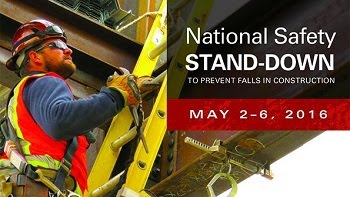 The third annual National Safety Stand-Down will take place from May 2 to 6, as employers across the country pause during the workday to engage workers in discussions, demonstrations, and training on how to recognize hazards and prevent falls. The event is part of OSHA’s effort to remind and educate construction employers and workers of the serious dangers of falls, which remain the leading cause of death in the industry.
Please visit OSHA’s Stand-Down webpage to learn how to participate as an employer or find an event in your area. All attendees will be eligible to receive a certificate of participation.
Two large-scale events are planned for the D.C. area: On May 3, all work will be suspended on the construction site of the MGM National Harbor Resort while OSHA and construction company representatives give presentations and training on fall prevention. On May 5, local construction companies and associations will host a stand-down event at The Fairgrounds at the Nationals baseball stadium that will include vendor exhibits, safety demonstrations and other interactive events.
In addition, OSHA Training Institute Education Centers will offer free fall protection training courses across the country.
Friday, March 25, 2016
OSHA announces final rule to improve U.S. workers' protection from the dangers of respirable silica dust
 OSHA today announced a final rule to improve protections for workers exposed to respirable silica dust. The rule will curb lung cancer, silicosis, chronic obstructive pulmonary disease and kidney disease in America's workers by limiting their exposure to respirable crystalline silica.
"The previous exposure limits were outdated and did not adequately protect workers," said OSHA Assistant Secretary Dr. David Michaels. "Limiting exposure to silica dust is essential. Every year, many exposed workers not only lose their ability to work, but also to breathe. Today, we are taking action to bring worker protections into the 21st century in ways that are feasible and economical for employers to implement."
 About 2.3 million men and women face exposure to respirable crystalline silica in their workplaces, including two million construction workers who drill and cut materials such as concrete and stone, and 300,000 workers in operations such as brick manufacturing, foundries and hydraulic fracturing. OSHA estimates that when the final rule becomes fully effective, it will save more than 600 lives annually and prevent more than 900 new cases of silicosis – an incurable and progressive disease – each year. The agency also estimates the final rule will provide net benefits of about $7.7 billion per year.
Most employers can limit harmful dust exposure by using equipment that is widely available – generally using water to keep dust from getting into the air or a ventilation system to remove it from the air. The rule provides greater compliance assistance to construction employers – many of which run small businesses – by including a table of specified controls they can follow to be in compliance. The rule also staggers compliance dates to ensure employers have sufficient time to meet its requirements.
The final rule is written as two standards, one for construction and one for general industry and maritime. In addition to reducing the permissible exposure limit for crystalline silica, the rule includes employer requirements such as limiting worker exposure through work practices and engineering controls (such as water or ventilation); providing respiratory protection when controls are insufficient; training workers; limiting their access to high exposure areas and providing medical exams to highly exposed workers.
For more information, see the news release—available in English and Spanish—and a blog post by U.S. Secretary of Labor Thomas E. Perez, which includes a video featuring one worker's personal experience with silicosis. Visit OSHA's silica rule webpage for factsheets, answers to frequently asked questions, and to sign up for email updates on compliance dates and resources.
Friday, March 18, 2016
Employers must post injury and illness summaries now through April
 OSHA reminds employers of their obligation to post a copy of OSHA's Form 300A, which summarizes job-related injuries and illnesses logged during 2015. The summary must be displayed in a common area where notices to employees are usually posted each year between Feb. 1 and April 30.
Businesses with 10 or fewer employees and those in certain low-hazard industries are exempt from OSHA recordkeeping and posting requirements. As of Jan. 1, 2015, certain previously exempt industries are now covered. Lists of both exempt and newly coveredindustries are available on OSHA's website. Visit OSHA's Recordkeeping Rule webpage for more information on recordkeeping requirements.
NIOSH and OSHA provide online resources to prevent aerial lift injuries and fatalities
 While aerial lifts are used frequently at construction, warehousing, and many other jobsites, they can pose potentially fatal hazards to workers. Aerial devices include boom-supported aerial platforms, such as cherry pickers or bucket trucks, aerial ladders and vertical towers.
The major causes of injuries and fatalities are falls, electrocutions, and collapses or tip-overs, such as the one that killed Kevin Miranda in Taunton, Mass., on Aug. 18, 2015. Skyline Contracting and Roofing Corp. was fined more than $100,000 after OSHA inspectors found that the aerial lift was positioned on unleveled ground and determined that the company had not trained Miranda to recognize this hazard.
Learn about the fall-related risks and recommended safe work practices associated with this equipment by visiting the new NIOSH Aerial Lifts webpage. The page includes a Hazard Recognition Simulator designed to help you acclimate to aerial lift operation. Additional resources on aerial lift safety are available from OSHA.
Subscribe to:
Posts (Atom)