 OSHA is proposing to delay the effective date of the rule entitled Occupational Exposure to Beryllium, from March 21 to May 20 to allow for further review and consideration. The extension is in keeping with a Jan. 20 White House memorandum that directed the review of any new or pending regulations. It would not affect the compliance dates of the beryllium rule. Comments on the proposed delay will be accepted through March 13 and can be submitted at www.regulations.gov. For more information, see the news release.

Center for Public Health Workforce Development eNews
Monday, March 20, 2017
Delay of beryllium rule effective date proposed to allow for further review
OSHA is proposing to delay the effective date of the rule entitled Occupational Exposure to Beryllium, from March 21 to May 20 to allow for further review and consideration. The extension is in keeping with a Jan. 20 White House memorandum that directed the review of any new or pending regulations. It would not affect the compliance dates of the beryllium rule. Comments on the proposed delay will be accepted through March 13 and can be submitted at www.regulations.gov. For more information, see the news release.

Sunday, March 19, 2017
Employers reminded to post injury and illness summaries through April
 OSHA reminds employers of their obligation to post a copy of OSHA's Form 300A, which summarizes job-related injuries and illnesses logged during 2016. The summary must be displayed from February through April in a common area where notices to employees are usually posted. Businesses with 10 or fewer employees and those in certain low-hazard industries are exempt from OSHA recordkeeping and posting requirements.
Friday, February 17, 2017
Free hazard communication webinar to be offered by American Staffing Association Feb. 28
 Through its alliance with OSHA, the American Staffing Association will host a free webinar Feb. 28 at 3 p.m. ET on “Communicating with Workers about Hazardous Materials.” The webinar will focus on how OSHA can help staffing firms and host employers better understand their responsibilities for ensuring the safety of temporary workers. During this webinar, OSHA Senior Industrial Hygienist Sven Rundman will discuss the hazard communication standard, and responsibilities for providing hazard communication information and training. For more information and to register, visit the webinar website.
Ladder safety is focus of national outreach campaign
 Falls from ladders are preventable, and yet they account for about 20,000 injuries and 300 deaths each year. On March 2, agency staff will discuss lessons from the field during a safety symposium hosted by the OSHA Education Center at the University of Texas, Arlington. The safety discussion, from 9 to 11:30 a.m., will also be live-streamed and can be viewed online. The event is organized in conjunction with the American Ladder Institute’s declaration of March as Ladder Safety Month. OSHA area directors Jack Rector and Basil Singh will share stories of ladder-related tragedies they have witnessed, along with ways those incidents could have been prevented. Ladder safety will also be an important component of OSHA’s annual National Safety Stand-Down set for May 8 through 12.
OSHA's free On-site Consultation Program helped more than 27,000 employers create safer workplaces in 2016
 Last year, 27,385 small and mid-sized U.S. businesses took advantage of OSHA's free and confidential On-site Consultation Program to remove workplace hazards and better protect their workers. The program primarily benefits small and mid-sized businesses – 57% of those helped last year had fewer than 26 employees. Priority is given to high-hazard industries, with more than half of all visits going to construction or manufacturing sites. In 2016, consultants identified and helped employers eliminate more than 140,000 total hazards, protecting an estimated 3.3 million workers from possible injury, illness or death.
Monday, January 23, 2017
Free course dates announced: Assessing, Controlling and Managing Dynamic Hazards Associated with Confined Spaces in Construction

Construction workers often perform tasks in confined spaces - work areas that (1) are large enough for a worker to enter, (2) have limited means of entry or exit, and (3) are not designed for continuous occupancy. These spaces can present physical and atmospheric hazards that can be prevented if addressed prior to entering the space to perform work. The construction confined space standard is expected to prevent roughly 780 serious injuries and five deaths yearly.
Who will this course benefit?
Small business owners, trainers, others with construction safety and
health responsibilities
Topics Covered:
• Worker training requirements and employer responsibilities
- Construction Industry Confined Spaces vs. General Industry
Confined Spaces
- Dynamic nature of Construction (things you don’t usually
find in General Industry)
- Identifying Construction Confined Spaces/Permit-Required
Confined Spaces
- Welding, burning chemicals, epoxies, shaft-work, vault work
- Hot Work, Lock-out/Tag-out
• Creating an inventory of Confined Spaces
- Managing the Construction Industry Confined Space Program
- Model site-specific orientation
- precedent: Subpart R- Steel Erection:
Controlling Contractor
- precedent: Subpart CC- Host has the responsibility
to inform contractors of existing hazards
- precedent: Hazard Communication Model
- Checklists and flowcharts
- Completing Permit-Required Confined Space
(PRCS) forms
- Labeling (signs, signal, and barricades)
- Labeling (signs, signal, and barricades)
This course will be held at
on the following dates:
February 17, 2017
March 1, 2017
March 24, 2017
April 3, 2017
April 24, 2017
May 12, 2017
June 5, 2017
Final rule clarifies recordkeeping obligations
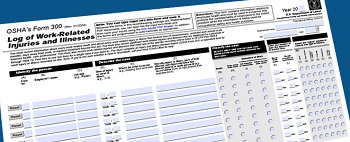 OSHA has issued a final rule that clarifies an employer's continuing obligation to make and maintain an accurate record of each recordable injury and illness. Effective Jan. 18, the new final rule more clearly states employers' obligations. "This rule simply returns us to the standard practice of the last 40 years," said OSHA Assistant Secretary Dr. David Michaels. "It is important to keep in mind that accurate records are not just paperwork; they have a valuable and potentially life-saving purpose." For more information, see the news release.
Worker health and safety should be an integral part of sustainability efforts
 A growing number of employers are incorporating the concept of sustainability in their business strategies. This approach factors financial, social and environmental concerns as part of a business' bottom line. OSHA recently launched several resources—including a white paper, blog, and organizational profiles—to demonstrate why protecting worker safety and health should also be part of any sustainability effort. The white paper highlights ways sustainability can include innovative approaches for advancing safety and health. To learn more, read the news release and visit OSHA's sustainability webpage. To share your questions, suggestions and successes, contact sustainability@dol.gov.
Recommendations for Anti-Retaliation Programs released
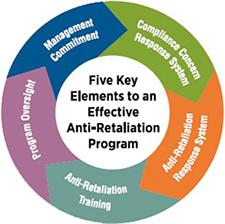 OSHA's Whistleblower Protection Programs has issued Recommended Practices for Anti-Retaliation Programs to help employers create workplaces in which workers feel comfortable voicing safety and other concerns without fear of retaliation. The recommendations, which are advisory only and create no new legal obligations, are intended to apply to all public and private sector employers covered by the 22 whistleblower protection laws that OSHA enforces.
Final rule on beryllium lowers exposure levels, will protect 62,000 workers
Subscribe to:
Posts (Atom)