
Center for Public Health Workforce Development eNews
Thursday, January 18, 2018
Resolve to Make Your Workplace Safe and Sound in 2018
The Safe + Sound Campaign encourages every workplace in the United States to have a safety and health program that includes management leadership, worker participation, and a proactive approach to finding and fixing hazards. The Safe + Sound Campaign supports employers' efforts by offering free webinars; resources from campaign organizers; and local events to support safety and health program development. For ways to get started and for other resources, visit the Safe + Sound Campaign webpage.

Monday, December 18, 2017
Winter Is Here: Be Prepared to Protect Workers from Weather-Related Hazards
 As outdoor temperatures drop and winter storms approach, employers should take measures to keep their employees safe. OSHA's Winter Weather webpage provides information on protecting employees from hazards while working outside during severe cold and snow storms. This guidance includes information on staying safe while clearing heavy snow from walkways and rooftops.
Redesigned Webpages Make It Easier to Find OSHA Training Resources
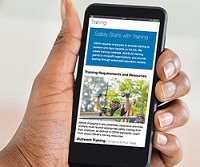 Employers and employees can get information on job safety classes, trainers, tools, and 10-hour and 30-hour cards more easily using OSHA’s redesigned training webpage. The page offers links to resources on training requirements and resources, outreach training, OSHA Training Institute Education Centers, and Susan Harwood Training Grants.
New and Revised Fact Sheets on Silica Now Available
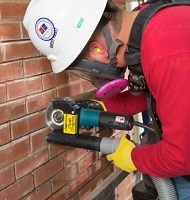 OSHA has released more than a dozen fact sheets that provide guidance on the respirable crystalline silica standard for construction. One fact sheet is an overview of the silica standard. The other fact sheets provide employers with information on how to fully and properly implement controls, work practices, and if needed, respiratory protection for each of the 18 tasks listed in Table 1— Specified Exposure Control Methods under the standard.
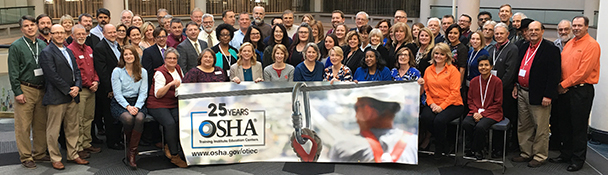
OSHA Training Institute Celebrates 25th Anniversary of Education Centers
OSHA Warns of Hazards When Using Roof Tarping in Hurricane Recovery Work
 Reinforced plastic tarps, commonly called “Blue Roofs,” provide temporary protection for the roofs of homes and other buildings damaged during severe weather such as a hurricane or tornado. When employees access roofs to install these tarps, they are at risk of falls, electrocutions, and other hazards. In a new fact sheet, OSHA recommends steps that employers can follow to help keep workers safe.
Monday, November 20, 2017
New Silica Standard Requires Pulmonary Function Testing by Trained Technicians.
 The new Silica Standard requires that pulmonary function tests be performed by trained technicians.
 1926.1153(h)(2)(iv)
A pulmonary function test to include forced vital capacity (FVC) and forced expiratory volume in one second (FEV1) and FEV1/FVC ratio, administered by a spirometry technician with a current certificate from a NIOSH-approved spirometry course;
Enroll in a NIOSH-approved spirometry course here: Rutgers School of Public Health - Center for Public Health Workforce Development
Compliance Date for Crane Operator Certification Requirements Set for November
 OSHA issued a final rule that sets November 10, 2018, as the date employers in the construction industry must comply with a requirement for crane operator certification. The final rule became effective on November 9, 2017. After issuing the final cranes and derricks rule in August 2010, stakeholders expressed concerns regarding the rule’s certification requirements. In response, the agency published a separate final rule in September 2014, extending by three years the crane operator certification and competency requirements. The additional one-year extension provides more time for OSHA to complete a rulemaking to address stakeholder concerns related to the Cranes and Derricks in Construction standard. Read the news release for more information
New Fact Sheets Available on Protecting Workers in the Shipyard and Maritime Industries
 OSHA has released four new fact sheets on protecting workers from common hazards found in the shipyard and maritime industries. The subjects covered by the four fact sheets are pedestal crane safety, housekeeping safety, fire and rescue in shipyard employment, and safe baggage handling.
Prevent the Spread of Seasonal Flu

Subscribe to:
Posts (Atom)