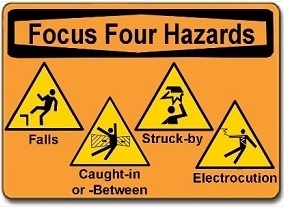
 On March 1, OSHA will launch a Focus Four Campaign in the Mid-Atlantic States to address the four leading causes of fatal injuries in construction. Throughout March, the campaign will use toolbox talks and outreach events to focus on electrical hazards. In April, the focus will be on struck-by hazards; May will target fall hazards; and June will focus on caught-in/between hazards. The campaign partners include OSHA consultation projects, state occupational safety and health agencies in Maryland and Virginia, the Mid-Atlantic Construction Safety Council, and the General Builders and Contractors Association. For more information, contact OSHA Assistant Regional Administrator Nicholas DeJesse.

Center for Public Health Workforce Development eNews
Monday, March 19, 2018
Regional Campaign Focuses on Four Most Deadly Construction Hazards
On March 1, OSHA will launch a Focus Four Campaign in the Mid-Atlantic States to address the four leading causes of fatal injuries in construction. Throughout March, the campaign will use toolbox talks and outreach events to focus on electrical hazards. In April, the focus will be on struck-by hazards; May will target fall hazards; and June will focus on caught-in/between hazards. The campaign partners include OSHA consultation projects, state occupational safety and health agencies in Maryland and Virginia, the Mid-Atlantic Construction Safety Council, and the General Builders and Contractors Association. For more information, contact OSHA Assistant Regional Administrator Nicholas DeJesse.

Secretary of Labor Discusses Efforts to Protect Children from Lead Exposure
 On Feb. 15, Secretary of Labor Alexander Acosta joined Environmental Protection Agency (EPA) Administrator Scott Pruitt and fellow Cabinet members to outline a federal strategy to reduce childhood lead exposure and associated health risks.
“Far too many Americans are exposed to lead in their workplace,” said Labor Secretary Alexander Acosta. “Finding solutions to better protect these workers and minimize the amount of lead that is taken home, and potentially exposed to their children, is a priority.”
OSHA’s resource, If You Work Around Lead, Don’t Take It Home!, highlights the dangers to children of lead being transported home from work, and offers precautions that can be taken.
For more information, read the EPA news release.
Monday, February 19, 2018
Managing Fall Hazards in Multiple Employer Construction Sites course dates offered
 Falls continue to be the leading cause of serious injuries and death on construction sites. Controlling contractors exert the most influence on multiemployer jobsites and set a general tone for work. This is often referred to as a “culture of safety.” The OSHA Susan Harwood
sponsored fall prevention training will address:
1. Fall protection as a general condition on construction worksites
2. Examples of multi-employer roles & responsibilities
3. Fall protection training requirements
Topics Covered:
• Understand Key Terms
• The Exposed Employer
• The Creating Employer
• The Correcting Employer
• The Controlling Employer
• Fall Hazards
• Fall to lower level
• Fall to same level
• Struck by falling object
• Understanding Gravity
• Hazards from inadvertently removing fall protection
• Working in controlled access zones
• Controlling hazards of shafts (HVACS, elevator shafts,
stairwells, and coring)
• Ladders, last choice.
• Supported Scaffolding
• Personnel Lifts
• Aerial Lifts
Masters in Public Health in Occupational Safety and Health Concentration for Fall 2018
 The Rutgers School of Public Health is accepting applications for Masters in Public Health in Occupational Safety and Health Concentration for Fall 2018. Registration deadline is May 1, 2018. Please contact Dr. Koshy at koshyko@rutgers.edu for more information, or visit http://sph.rutgers.edu.
New Publications on Tree Care and Silica Offer Worksite Safety Solutions
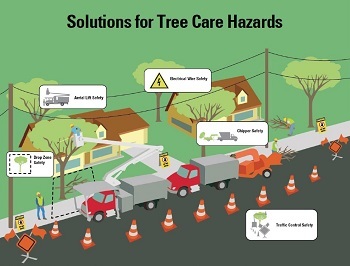 Falling tree limbs, moving vehicles, overhead power lines, and high noise levels are a few of the dangers professional tree care workers may encounter. OSHA’s new resource, Solutions for Tree Care Hazards, highlights common hazards in the tree care industry, and provides safety measures for employers and workers. OSHA is also publishing a revised fact sheet that summarizes the major requirements of the respirable crystalline silica standard for general industry and maritime.
Safe + Sound Campaign: If You Care About Your Workers, Engage Them in Safety and Health Discussions
 Want to demonstrate your commitment to safety and health? Talk with your most valuable resource: workers are familiar with the hazards they face each day, and can help identify and fix hazards before injuries or illnesses occur.
- Speaking of Safety: Changing the Atmosphere Around Safety Conversations, an article from the National Safety Council, shows how to have effective safety and health conversations with workers.
- Listening and communication skills are crucial to building a foundation for safety leadership. To learn more, sign up for the Safe + Sound Campaign’s first live, free webinar hosted by CPWR: The Center for Construction Research and Training on Wednesday, Feb. 21 at 2 p.m. EST.
Prevent the Spread of Seasonal Flu
 As cases of flu remain high across the country, proper precautions must be taken to keep workers healthy. OSHA’s Seasonal Flu webpage provides basic precautions that should be used by employers and workers in all workplaces, such as frequent hand washing, and covering coughs and sneezes. OSHA also recommends that health care professionals follow infection control practices; use gloves, gowns, and other protective equipment to reduce exposures; and encourage sick workers to stay home.
Thursday, January 18, 2018
OSHA Outreach Trainer Update
 Effective January 1, 2018, Outreach Trainers (Construction, General Industry, Disaster, and Maritime) who let their trainer credentials lapse (past 90 days of expiration) must retake the Standards course (OSHA 510, 511, or 5410) in addition to the initial trainer course (OSHA 500, 501, or 5400), if they took the standards course over seven years ago.
Wishing a Happy Retirement to Edward Bulava, CIH

Edward Bulava, CIH, retired after nearly 30 years of teaching Asbestos and Industrial Hygiene Continuing Education programs at the Rutgers School of Public Health (formerly UMDNJ). Ed, we will miss you. Thank you for your many years of dedicated service on behalf of the occupational and environmental practitioners in New Jersey.
New Publication Warns of Fatal Confined Space Hazards on Farms
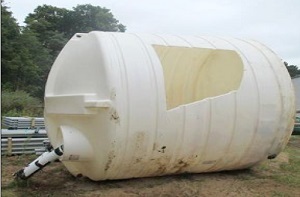 An addition to OSHA's Fatal Facts series emphasizes the hazards of working in confined spaces on farms. These spaces include grain and feed silos, sump pits, and manure storage tanks. Employers should ensure measures are put in place to alert workers to a potential hazardous atmosphere inside confined spaces and prevent workers from entering them without protective controls. The fact sheet examines an incident in which a worker asphyxiated inside a whey storage tank. Each Fatal Facts publicationdescribes a case in which there was a failure to identify and correct hazardous working conditions before a fatality occurred at the worksite.
Subscribe to:
Posts (Atom)