 The National Institute for Occupational Safety and Health recently released a chemical management strategy that can quickly and accurately assign chemicals into categories to protect workers on the job.

Center for Public Health Workforce Development eNews
Friday, August 23, 2019
Chemical Safety
The National Institute for Occupational Safety and Health recently released a chemical management strategy that can quickly and accurately assign chemicals into categories to protect workers on the job.

Trench Safety
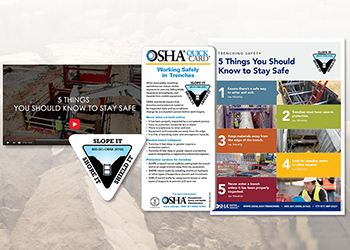 Learn how to keep workers safe during trenching and excavation operations with OSHA resources including a poster, flyer, alert, stickers, and videos.
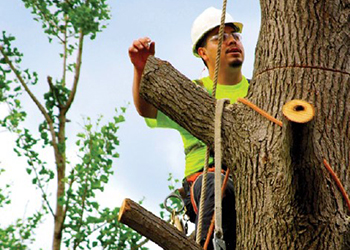
OSHA tree care worker safety: falls and falling objects, electrocution, and other hazards.
Water. Rest. Shade.
 Prepare for hot environments, whether indoors or outdoors. OSHA has resources to keep workers safe from heat.
 Millions of U.S. workers are exposed to heat in their workplaces. Although illness from exposure to heat is preventable, every year, thousands become sick from occupational heat exposure, and some cases are fatal. Most outdoor fatalities, 50% to 70%, occur in the first few days of working in warm or hot environments because the body needs to build a tolerance to the heat gradually over time. The process of building tolerance is called heat acclimatization. Lack of acclimatization represents a major risk factor for fatal outcomes.
Using Leading Indicators to Improve Safety and Health Outcomes
 A new OSHA webpage shows how businesses can improve safety and health programs by tracking workplace conditions and events to prevent injuries or illnesses before they occur.
Leading indicators can play a vital role in preventing worker fatalities, injuries, and illnesses and strengthening other safety and health outcomes in the workplace. Leading indicators are proactive and preventive measures that can shed light about the effectiveness of safety and health activities and reveal potential problems in a safety and health program.
Friday, July 19, 2019
New OSHA Alert Focuses on Working Safely in Hot Weather
 A new OSHA Alert offers information and resources to protect workers from heat-related illness when performing activities in high temperatures and humid conditions. The latest in a series of alerts addresses safety hazards and solutions that are associated with specific equipment, events, or activities.
Hurricane Preparedness and Response
 Hurricanes and tropical storms can create a variety of hazards for workers. Preparing for weather-related emergencies plays a vital role in ensuring that employers and workers have the necessary equipment to stay safe when severe weather strikes. OSHA’s Hurricane Preparedness and Response page provides information on creating evacuation plans and supply kits and reducing hazards for hurricane response and recovery work.
Featured Publication: Lighting the Way for Safety and Health Programs
 A case study produced through OSHA’s Electric Transmission and Distribution Strategic Partnership illustrates how safety and health programs can protect workers from industry hazards, such as electrocutions, falls, fires, and explosions. The study provides examples of and inspirations for programs that can find and fix hazards before they harm workers.
Thursday, June 27, 2019
 Rutgers School of Public Health is offering OSHA 7300: Understanding OSHA’s Permit-Required Confined Space Standard course in Somerset, New Jersey, in celebration of Safe & Sound week. This no fee, 1-day course will be held on August 15, 2019.
Confined space entry work carries an inherent risk to workers. It has the potential to contain a hazardous environment, contain materials that have the potential to engulf an entrant, walls that converge or floors that slope downward, which may trap or asphyxiate an individual. They may also contain other recognized health or safety hazards, such as unguarded machinery, exposed live wires or heat stress.
New OSHA Resources Offer Solutions to Common Safety Hazards
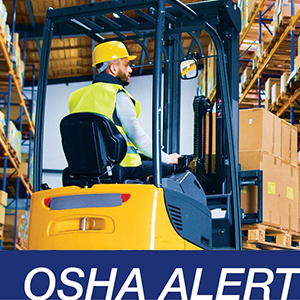 A new series of OSHA Alerts addresses safety hazards associated with specific activities, equipment, or events. Each alert identifies the hazards involved and offers clear solutions to keep workers safe. Alerts currently available focus on flood recovery and cleanup, trenching and excavation, and forklift operation.
OSHA’s new flyer on five things you should know to stay safe in a trench addresses the most common trench-related hazards. The agency has additional resources for employers and workers on trenching safety, including a short video.
Subscribe to:
Posts (Atom)